

Acers, also known as maples, are beautiful trees that can add glorious colour throughout the year to any outdoor space. The great thing is, these trees vary greatly, so whether you’re looking for a big and impressive variety or something compact but beautiful, there’s an acer to suit everyone’s needs.
So, where do you start when it comes to caring for acers? Here are some top tips to help these stunning plants thrive!
Choosing the right acer
Choosing the right Acer depends on a few important factors including your available space, sunlight and aesthetic features such as your desired foliage colour.
-
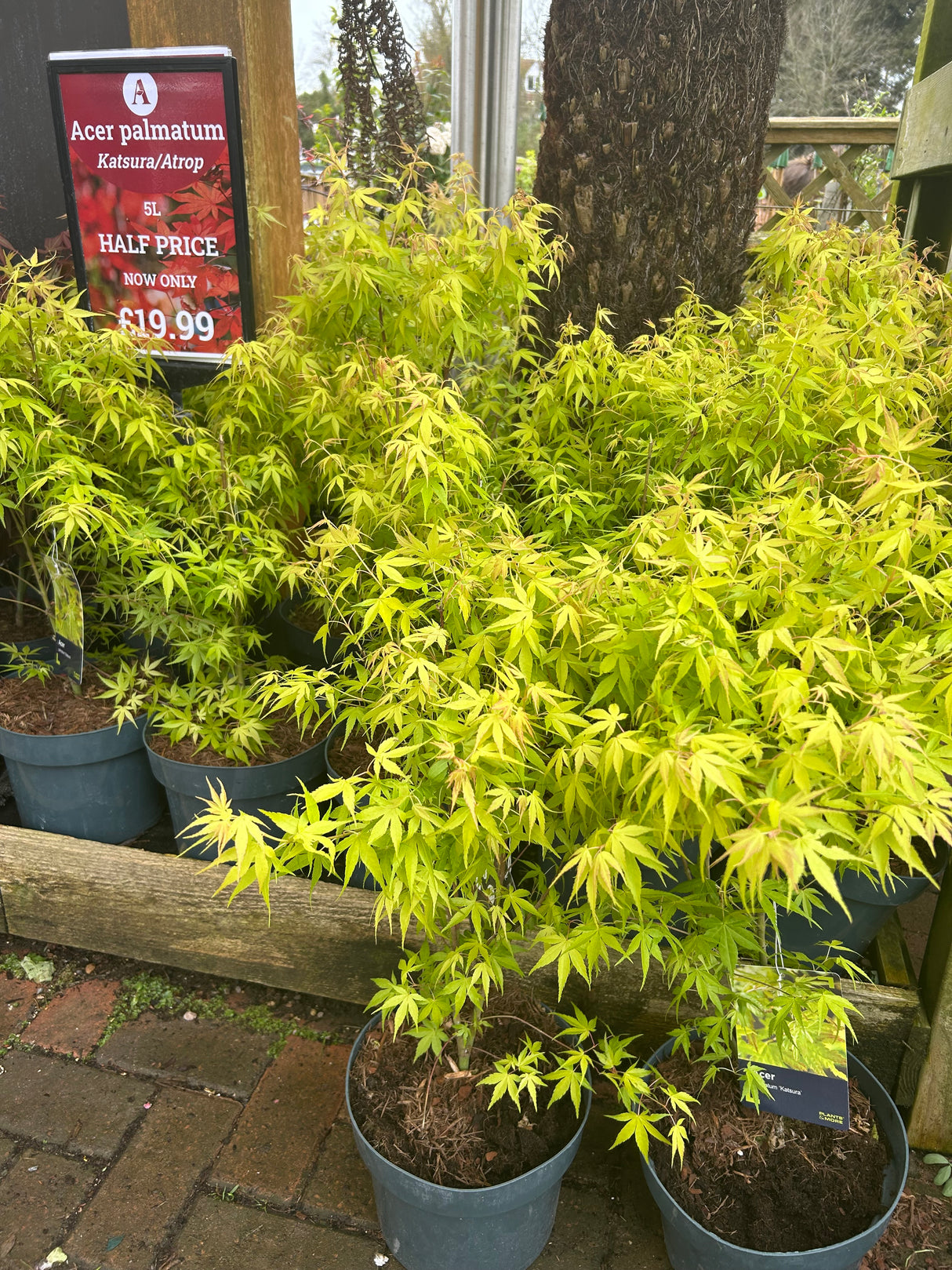
For small gardens or patios: Choose dwarf, slow-growing varieties such as a Palm Katsura.
-
For bigger gardens: Options include Acer palmatum 'Bloodgood' with deep red-purple foliage that holds its color well and turns bright red in autumnm, Acer palmatum 'Osakazuki' with an intense crimson autumn colour or acer griseum (Paperbark Maple for year-round interest.
Acers are known for their dramatic colour change which makes them such a great focal point. Trees with deep reds are a popular option, while orange dream (which has orange-yellow foliage) can brighten up the garden in Spring.

-
Location & Climate: Acers prefer sheltered spots with partial shade to prevent leaf scorch, particularly for red-leaved varieties. They thrive in slightly acidic, well-drained soil.
Planting acers
Once you’ve got your acer home, where should it be planted? Acers can grow in the ground or in pots depending on the space available and once they’re planted, they’re very easy to care for.
Can acers grow in pots?
Acers are ideal for growing in pots as they have shallow roots and are slow growing. They’ll need a pot with good drainage ideally two to three times the width of the extended roots. If your tree is still in its original pot then as a general rule your new container should be three times as wide as the tree’s original container.
What kind of soil for acers like?
Acers do best in slightly acidic soil so try ericaceous compost when potting up.

What’s the best position for acers?
When choosing where your acer should go, the best position is a sheltered spot with dappled or partial shade, protected from strong winds and harsh, direct afternoon sun, which can scorch leaves.
Feeding acers
The best time to feed acers is in early spring (March-April) as buds emerge, but generally, acers in the ground don’t require feeding. However, acers in pots can benefit from a little boost at the start of the season!
When and how to feed acers
Feed acers at the start of Spring. They aren’t super greedy plants but giving them the right nutrients will support healthy growth.
Acers are not greedy feeders, however they do require the right nutrients when first planted and as a supplement once or twice each year. Vitax Acer Feed is specially formulated to provide the right nutrients for healthy growth and development and the finest foliage.
An organic fertiliser it releases nutrients slowly and contains sufficient potash to harden leaves and stems, making them more tolerant of extreme weather.
Pruning acers
Acers generally require very little pruning with the occasional need to remove dead branches to help them maintain their airy shape.
When to prune acers
The best time to prune is November to January during the dormant season to avoid heavy sap bleeding.
Do acers get diseases?
Acers can get diseases and although many problems arise from environmental stress. Proper planting, avoiding waterlogged soil and sheltering acers from wind or hot sun are key to prevention.
-
Verticillium Wilt: This is the most serious disease that can affect an acer. This soil-borne fungus causes branches to die back and, often, a discoloration in the wood. It enters through damaged roots, making it crucial to avoid root disturbance.
When water is lost from the leaves faster than the roots can take it up you will get scorching of the leaf tips. This is the commonest cause of problems with acers and one which is quite hard to explain because people naturally assume that there is something wrong with what they have bought.
Leaf scorch can be caused by inadequate watering, by allowing the plant to dry out, or, most commonly, because the plant is in too hot and windy a position to start with.
Acers can be a beautiful addition to any garden and provide gorgeous colour all year round. Don’t forget to pop in-store to see our acer collection or shop online!
Acer FAQs
How do you revive a dying acer tree?
To bring your acer tree back to life, scratch a small section of bark with your fingernail - if it’s green underneath this indicates it is still alive. Next, check its position by moving it to a shady spot where it’s more protected from harsh afternoon sun and lastly, keep the soil moist but not sodden.
What size pot does an acer tree need?
Acers need pots that are roughly double the volume of their current root ball with plenty of drainage.
When is the best time to move an acer tree?
The best time to move an acer (Japanese Maple) tree is during its dormant season, typically from November to February. Moving them when they are dormant, ideally in late winter before new buds break, minimises stress and allows roots to settle before spring.